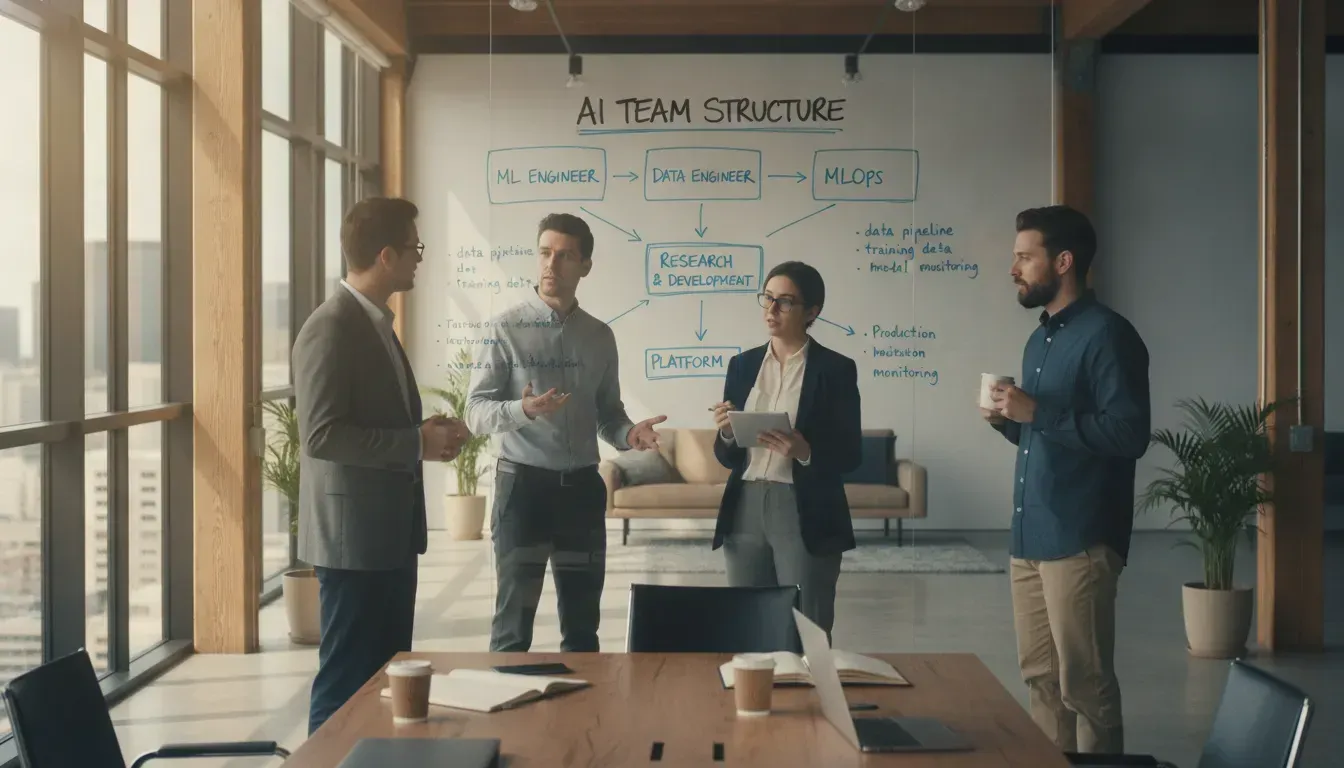
Hiring for top AI talent can feel like an impossible task. Your best engineers are stuck screening resumes, the most qualified candidates are off the market in days, and your job posts attract everyone except the person you actually need. This is where a dedicated AI recruiter comes in. This isn't about replacing your team with algorithms; it's about partnering with a specialist who combines deep industry knowledge with powerful technology to find the right people, faster. They handle the heavy lifting, from sourcing passive candidates to vetting technical skills, so your team can focus on building great products. This guide explains how this partnership works and why it’s essential for any company serious about competing in the AI space.
Key Takeaways
- Balance automation with human insight: Use AI recruiting tools to handle repetitive tasks like initial screening, but rely on a human expert to assess culture fit, build relationships, and make final strategic hiring decisions.
- Make smarter, faster hires: A specialized AI recruiter streamlines your process by automating time-consuming tasks, which shortens your time-to-hire and reduces costs, while a data-driven approach helps minimize bias and improve candidate quality.
- Seek specialized expertise for AI talent: General AI tools often miss the nuances of technical roles, so a specialized recruitment partner is essential for providing industry knowledge and access to a network of passive candidates you wouldn't find otherwise.
What is a Dedicated AI Recruiter?
When you hear “AI recruiter,” you might picture a robot sorting through resumes. The reality is much more nuanced and, frankly, more effective. A dedicated AI recruiter is a specialist who combines deep industry knowledge with powerful AI-driven tools to find the perfect talent for your team. Think of them as a strategic partner who understands the unique demands of the AI and machine learning landscape. They go beyond simple job board postings to actively source, vet, and connect you with professionals who have the specific, high-demand skills you need. This approach blends the best of technology with essential human insight.
AI Recruiters vs. Traditional Software
Traditional recruiting methods often rely on basic keyword searches. If a resume doesn't have the exact right term, a great candidate can easily be overlooked. A dedicated AI recruiter uses more advanced tools that evaluate a candidate's actual competencies, not just their buzzwords. Instead of just scanning for "Python," these systems can understand the context and proficiency needed for a specific AI Engineering role. This leads to a much better candidate-job fit from the start. The best AI recruiting partners also demonstrate their value with clear metrics and structured evaluations, ensuring you see exactly how they identify top talent and deliver consistent results.
Using NLP and Predictive Analytics in Hiring
So, what’s the tech behind the magic? Two key players are Natural Language Processing (NLP) and predictive analytics. NLP allows recruiting tools to understand human language, analyzing resumes and profiles with a level of detail a person simply can’t match at scale. This helps streamline everything from sourcing to screening. Predictive analytics takes this a step further by using data to identify which candidates are most likely to succeed in a role. Our hiring solutions use these technologies to search through millions of profiles, pinpointing top-tier professionals who are not only qualified but also a great potential fit for your team’s future.
How Does an AI Recruiter Work?
So, how does an AI recruiter actually find the right people for your team? Think of it as a powerful assistant that automates the most time-consuming parts of hiring. These systems use sophisticated algorithms to go from a massive pool of potential candidates to a curated shortlist of top contenders. They handle everything from the initial search to the final ranking, all while integrating with the tools you already use. Let's break down the process step-by-step to see how it all comes together.
Sourcing Candidates and Analyzing Resumes
The first step in any hiring process is finding qualified candidates, and this is where AI recruiting tools begin. Instead of just posting a job and waiting, these systems actively search across millions of profiles on job boards, professional networks, and company databases. When applications do come in, the AI doesn't just scan for keywords. With so many resumes now optimized by other AI tools, a simple keyword match isn't enough. Advanced AI recruiters analyze experience, skills, and career progression to understand the context behind the resume, helping you find hidden gems and see past the fluff. This intelligent analysis is a core part of modern hiring solutions.
Screening and Engaging Candidates Automatically
Once the AI has a pool of potential candidates, it begins the screening process. This is where it really saves your team time. The system can automatically screen every single applicant against your job criteria, far more consistently than a human could. It can then engage qualified candidates with initial outreach, answer their basic questions via a chatbot, and even schedule the first interview. This automated engagement ensures that no good candidate slips through the cracks and that everyone receives a timely response, which improves the overall candidate experience. This level of screening is especially critical in highly technical fields like AI engineering.
Scoring Candidates with Predictive Analytics
After the initial screen, AI recruiters use predictive analytics to score and rank the remaining candidates. The system looks at the data from a candidate's resume, screening questions, and sometimes even pre-interview assessments to predict their potential for success in the role. It compares their profiles against data from your company's past successful hires to identify patterns and indicators of a great fit. This data-driven approach helps surface the most promising individuals and provides a more objective starting point for your hiring team. The technology behind this is a practical application of data science and analytics principles to the world of recruitment.
Integrating with Your HR Systems
Finally, a good AI recruiter doesn't operate in a vacuum. For these tools to be effective, they must integrate seamlessly with your existing HR systems, especially your Applicant Tracking System (ATS). This integration creates a smooth workflow, ensuring that all candidate data is captured, tracked, and managed in one central place. It prevents your team from having to jump between different platforms and manually transfer data, which eliminates errors and speeds up the entire hiring process. Partnering with a specialist who understands how to manage these systems helps your team move faster and access top talent without adding internal strain.
Why Use an AI Recruiter?
Partnering with a dedicated AI recruiter can fundamentally change how you attract and hire top talent. It’s about more than just filling an open position; it’s about making your entire hiring process smarter, faster, and fairer. In a field as competitive as artificial intelligence, using a specialized recruiter gives you a significant advantage. They combine deep industry knowledge with powerful technology to connect you with candidates you might otherwise miss, helping you build the expert team you need to succeed. Let's look at some of the biggest benefits.
Hire Faster
In the fast-moving world of AI, speed is everything. The best candidates are often off the market in days, not weeks. An AI recruiter helps you move much more quickly by automating the most time-consuming parts of the hiring process. Instead of manually sifting through hundreds of resumes, an AI-powered system can screen and shortlist the most qualified applicants almost instantly. This allows your team to spend less time on administrative work and more time engaging with top-tier professionals. This efficiency means you can shorten your hiring cycle and secure the AI engineering talent you need before your competitors do.
Reduce Hiring Bias
Unconscious bias is a persistent challenge in recruitment, but it's one that AI can help address. A specialized AI recruiter uses tools designed to focus on what truly matters: a candidate's skills, qualifications, and experience. By standardizing the initial screening process and ignoring demographic information that can trigger unconscious biases, these systems help create a more equitable playing field for all applicants. While no system is perfect, this approach is a powerful step toward building a more diverse and innovative team. It ensures your hiring decisions are based on merit, which ultimately leads to stronger, more capable data science and analytics teams.
Improve the Candidate Experience
Your hiring process is often a candidate's first real interaction with your company, and a poor experience can tarnish your brand. AI recruiters help ensure every applicant feels valued and informed. They can provide instant confirmation that an application has been received, offer 24/7 support through chatbots to answer common questions, and send timely updates on application status. This level of communication keeps candidates engaged and shows respect for their time and effort. Even if they don't get the job, a positive experience leaves them with a good impression of your company, which is invaluable in today's talent market.
Scale for High-Volume Hiring
Whether you're a startup in a rapid growth phase or a large enterprise building out a new division, scaling your hiring efforts can be a major challenge. An AI recruiter is built to handle volume. They can process thousands of applications a day without a drop in quality, something a human team simply cannot do. This capability is essential when you need to fill many roles quickly or are hiring for a position that attracts a large number of applicants. By leveraging technology to manage the load, you can efficiently build out your machine learning teams without overwhelming your internal HR department.
Save Costs and Make Data-Driven Decisions
An efficient hiring process is a cost-effective one. By automating tasks like sourcing, screening, and scheduling, an AI recruiter significantly reduces the hours your team spends on each hire, which translates directly into lower costs. Beyond the immediate savings, these systems provide a wealth of data that can inform your entire recruitment strategy. You can analyze which sourcing channels deliver the best candidates, refine your job descriptions for better results, and track key metrics over time. This data-driven approach helps you make smarter hiring solutions and continuously improve your ability to attract the best AI talent.
Common Myths About AI Recruiters
As AI becomes more common in hiring, a lot of misconceptions have popped up. It’s easy to get the wrong idea about what AI recruiters can and can’t do. Let's clear the air and look at some of the most common myths so you can understand how these tools really work and where specialized human expertise still makes all the difference.
Myth: AI Will Replace Human Recruiters
This is probably the biggest myth out there. The reality is that AI is designed to be an assistant, not a replacement. Think of it as a powerful tool that handles the repetitive, time-consuming tasks, like sifting through hundreds of resumes. This frees up human recruiters to focus on what they do best: building relationships with candidates, understanding the subtle needs of a hiring manager, and making strategic decisions. AI handles the data, while people handle the nuance and connection. The goal isn't to remove people from the process but to make them more effective.
Myth: AI Is Totally Unbiased
While AI has the potential to make hiring fairer, it’s not automatically free from bias. An AI tool is only as objective as the data it learns from. If the historical hiring data used to train the algorithm contains biases, the AI can unintentionally learn and even amplify them. The key is to use AI as one part of a well-rounded hiring strategy. When used correctly, AI can help you focus on skills and qualifications over demographics. This requires careful implementation and ongoing audits, which is where an expert in Data Science & Analytics can be invaluable.
Myth: AI Can Judge Culture Fit and Soft Skills
AI is great at analyzing data, but it falls short when it comes to the human element. It can screen for keywords related to skills and experience, but it can't have a conversation to gauge a candidate's communication style, problem-solving approach, or passion for your company's mission. These are the soft skills and cultural alignments that often determine a new hire's long-term success. That’s why you still need a human to assess soft skills and determine if a candidate will truly thrive on your team. AI can get them to the interview, but a person needs to make the final call.
Myth: AI Recruiting Is Just for Big Companies
You don't need to be a massive corporation to benefit from AI in your hiring process. While building a custom, in-house AI recruiting platform is expensive, smaller companies and startups can get the same advantages by working with a specialized agency. Partnering with an agency gives you access to powerful AI tools and a global talent network without the hefty price tag or internal strain. It levels the playing field, allowing you to find top-tier AI and ML talent quickly and efficiently, regardless of your company's size.
Where AI Recruiters Fall Short
While AI recruiting tools offer some impressive benefits, they aren't a perfect solution. Thinking of them as a cure-all for your hiring challenges can lead to disappointment and, worse, cause you to miss out on incredible talent. These platforms are powerful assistants, but they have significant limitations that require a human expert to manage. Understanding where these tools fall short is the first step to building a hiring process that blends the best of automation with the irreplaceable value of human insight. From flawed data to a lack of personal connection, knowing the pitfalls helps you create a more effective and fair recruitment strategy.
The Challenge of Data Quality
An AI is only as smart as the data it learns from. This is the single biggest challenge with AI recruiting tools. Algorithms that scan resumes and match candidates to job descriptions rely entirely on the quality of their training data. If the system is trained on vague, outdated, or biased job descriptions, its assessments will be inaccurate. It might screen out a brilliant AI Engineer whose resume doesn't use the exact keywords the algorithm is looking for, or it might prioritize skills that are no longer relevant. This "garbage in, garbage out" problem means you can't simply trust the AI's recommendations without a critical eye. A human recruiter is needed to interpret the nuances that an algorithm might miss.
Data Privacy and Ethical Concerns
Using AI in hiring brings up important ethical questions. Without careful design and oversight, these tools can accidentally reinforce existing biases. For example, if an AI learns from past hiring data that favored candidates from specific backgrounds, it may continue to perpetuate that pattern, creating an unfair process. Companies also need to be transparent with candidates about how their personal information is being used and stored, ensuring compliance with data protection regulations. Building a truly inclusive and ethical hiring process requires more than just software; it requires a commitment to fairness that a specialized recruitment agency can help uphold by actively monitoring for and correcting algorithmic bias.
The Risk of Losing the Human Touch
Hiring is fundamentally a human process. While an AI can efficiently sort through applications, it can't replicate the connection and understanding that comes from a real conversation. Candidates want to talk to a person who can answer their nuanced questions, understand their career aspirations, and give them a genuine feel for the company culture. A great recruiter builds rapport and advocates for both the candidate and the company to ensure a perfect match. This human element is critical for assessing soft skills, motivation, and culture fit, areas where AI simply can't compete. Relying too heavily on automation risks creating a cold, impersonal experience that can turn off top talent.
How to Measure an AI Recruiter's Success
When you bring in a specialized AI recruiter, you need to know if they’re delivering real value. Going beyond gut feelings means looking at concrete metrics that show how they’re impacting your hiring process. The best recruiting partners prove their worth with clear data, demonstrating their ability to deliver high-quality candidates for technical roles consistently. Measuring success isn't just about filling an open position; it's about assessing the speed, quality, and overall efficiency of every hire. By tracking the right key performance indicators (KPIs), you can see the tangible return on your investment and ensure your recruiting strategy is on the right track.
Tracking Time-to-Hire and Conversion Rates
In the fast-paced world of AI, top talent doesn’t stay on the market for long. That’s why time-to-hire, the period from opening a job requisition to getting an accepted offer, is a critical metric. A long, drawn-out process can cause you to lose your best candidates to competitors. A skilled AI recruiter shortens this timeline by tapping into their existing network of pre-vetted professionals. You should also watch your conversion rates at each stage of the hiring funnel. A great partner won’t just send you a high volume of resumes; they’ll provide a shortlist of candidates who are a strong match, leading to higher interview-to-offer ratios. This efficiency is a hallmark of effective hiring solutions.
Measuring Candidate Quality and Retention
A quick hire means little if the new employee isn't a good long-term fit. The true test of a recruiter's success is the quality and retention of the candidates they place. Candidate quality can be measured through performance reviews, the achievement of initial project goals, and feedback from team leads after the first few months. Ultimately, the strongest indicator is retention. A high retention rate after one year shows that the recruiter found someone who not only has the right technical skills but also fits your company culture. Specialized recruiters excel here because they understand the nuances of roles in fields like Data Science & Analytics, leading to more accurate and lasting placements.
Calculating Cost-per-Hire and Efficiency
While it might seem counterintuitive, partnering with a specialized agency can actually lower your overall cost-per-hire. This metric isn’t just the recruiter’s fee; it includes the internal costs associated with the hiring process. Think about the hours your senior engineers and managers spend sifting through resumes and conducting interviews instead of focusing on their core work. Your team’s inbound pipeline is likely flooded with resumes, but the best candidates may not even be in that pile. A dedicated AI recruiter cuts through the noise, saving your team from this internal strain. By presenting only a few top-tier candidates, they make the entire process more efficient and allow your team to hire better talent, faster. This is the kind of value a true partner, like the team at People in AI, provides.
Is an AI Recruiter Right for Your Business?
Deciding whether to use an AI recruiting tool isn't just about adopting new technology; it's a strategic choice that depends entirely on your company's goals, size, and the specific roles you need to fill. While AI platforms can be great for managing high volumes of applicants, they aren't a one-size-fits-all solution, especially in the complex world of AI and machine learning talent. The key is to match the tool, or the partner, to the problem you're trying to solve. To figure out if an AI recruiter is the right move for you, let's walk through a few key questions about your business.
Consider Your Company Size and Hiring Needs
Your company's current growth stage plays a huge role in what kind of hiring support you need. A large enterprise looking to fill hundreds of similar entry-level tech roles might find an AI platform useful for initial resume screening. But if you're a startup or a mid-sized company, your hiring priorities are likely different. You might be searching for a few key individuals, like a lead Data Scientist, whose skills will define a product's success. In these high-stakes situations, a more hands-on, consultative approach is often more effective than automated screening. The right recruiting partner will offer a tailored solution that aligns with your specific growth stage and priorities.
Think About Your Industry's Needs
Hiring in the AI space is uniquely challenging. You're not just looking for keywords on a resume; you're looking for people who can solve complex problems in machine learning, deep learning, and autonomous systems. An AI tool can identify a candidate who lists "Python" and "TensorFlow," but can it evaluate the quality of their experience or understand the nuances of their project work? This is where a strategic partner with deep industry knowledge becomes essential. You need someone who can vet, screen, and engage candidates on a technical level, ensuring they have what it takes to thrive in a highly specialized environment.
Define Your Hiring Goals
What is the biggest challenge you're facing in recruitment right now? If your inbound pipeline is flooded with hundreds of applications for every open role, an AI sourcing tool might help you manage the volume. However, many companies face the opposite problem: the best candidates aren't even applying. Top-tier AI talent is often passive, meaning they are already employed and not actively looking for a new job. An automated platform can't find people who aren't looking. If your goal is to attract this caliber of talent, you need a proactive sourcing strategy led by specialists who know where to find these professionals and how to engage them.
How to Choose the Right AI Recruiter
Finding the right recruitment partner can feel like a job search in itself, but it’s a critical step for building a strong team. When you’re hiring for highly specialized AI roles, you’re not just looking for a service; you’re looking for a partner who understands your vision and can connect you with the people who will bring it to life. The right recruiter acts as an extension of your own team, representing your brand and culture to top candidates. To make sure you find the best fit, focus on a few key areas that separate the great recruiters from the rest.
Look for Specialization and Expertise
The AI landscape is incredibly complex and changes quickly. A generalist recruiter might not grasp the difference between a Machine Learning Engineer and a Data Scientist, but a specialist will. Partnering with a recruiting company that focuses specifically on AI helps your team move faster, hire better, and access global talent without adding internal strain. A specialized firm lives and breathes your world. They understand the nuances of different roles and have a pre-existing network of qualified professionals. When you speak with a potential recruiter, ask about their areas of expertise to ensure they have a deep understanding of the specific talent you need, whether it's in AI Engineering or MLOps.
Check Their Performance Metrics
Talk is one thing, but results are what matter. The best AI recruiting companies can back up their claims with clear data. They should be able to prove their value through performance metrics, structured evaluations, and a history of consistent delivery across different technical roles. Before committing, ask about their average time-to-hire, candidate submission-to-interview ratios, and offer acceptance rates. This isn't about being difficult; it's about ensuring you're partnering with a firm that has a proven, results-driven process. A confident recruiter will be happy to share their success metrics and case studies, demonstrating the effectiveness of their hiring solutions.
Find a Balance Between Automation and a Human Touch
While AI tools can improve matching accuracy by evaluating skills against job requirements, the human touch is essential for making the final call. The ideal recruitment partner uses technology to streamline the process, not replace human connection. They leverage automation for sourcing and initial screening but rely on their expert recruiters to conduct in-depth interviews, assess soft skills, and determine culture fit. This balanced approach ensures efficiency without sacrificing quality. A great recruiter builds genuine relationships with both clients and candidates, which is something an algorithm alone can't do. Look for a partner who highlights the expertise of their human team as much as their tech stack.
Make Sure Your Communication Styles Match
Finding the right AI recruiting agency depends heavily on your company’s growth stage and hiring priorities. It's crucial to find a partner whose communication style aligns with your team's culture and expectations. Are you looking for daily updates, or is a weekly summary enough? Do you prefer formal reports or quick, informal chats? A recruiter is your company’s ambassador to the talent market, so their style should reflect your brand. During your initial conversations, pay attention to how they communicate. Are they responsive, transparent, and good listeners? A strong partnership is built on clear and compatible communication, creating a seamless experience for everyone involved.
Why Specialized AI Recruitment Agencies Still Matter
With so many AI-powered tools available, you might wonder if you still need a recruitment agency. While automated platforms are great for sifting through applications, they can’t replace the strategic insight and deep connections of a specialized partner. Think of it this way: an AI tool can find a needle in a haystack, but a specialized recruiter knows which haystack to search in the first place and can tell you if it’s the right needle for your specific project. The real magic happens when human expertise guides powerful technology.
Partnering with a dedicated agency is also a smart move for your internal resources. Instead of your team spending valuable time writing job descriptions, sourcing candidates, and managing a complex pipeline, they can focus on their core responsibilities. A specialized firm offers hiring solutions that handle the heavy lifting, helping you move faster and hire better without adding strain to your existing team. This efficiency allows you to scale your hiring efforts effectively, whether you're looking for one key person or building out an entire department.
Specialized agencies also provide access to talent you simply won’t find on public job boards. We spend years building relationships with top professionals in fields like Machine Learning and Data Science. These are often passive candidates, people who are excelling in their current roles but are open to the right opportunity. An agency can tap into this exclusive network to find candidates with the exact, often rare, skill sets you need.
Finally, a great agency acts as a true partner. We get to know your company culture, your long-term vision, and the specific challenges your team is trying to solve. This deep understanding allows us to find candidates who are not just technically qualified but are also a great fit for your team's dynamics. Our team provides the context, nuance, and market insights that an algorithm can't, ensuring you make a hire that contributes to your success for years to come.
Related Articles
Frequently Asked Questions
Is an AI recruiter a person or just a piece of software? That’s a great question because the term can be confusing. Think of it this way: AI recruiting platforms are software tools that automate tasks like resume screening. A dedicated AI recruiter, which is what we are, is a human expert who uses these powerful tools to find the best talent. The software handles the heavy lifting, but a person handles the critical thinking, relationship building, and strategic decisions needed to make a great hire.
I'm worried about bias. Won't using AI in my hiring process make it less fair? This is a valid concern, and it’s something we take very seriously. An AI tool is only as objective as the data it’s trained on, so there is a risk that it could learn and repeat existing biases if left unchecked. This is why human oversight is essential. We use AI to help focus on a candidate's skills and qualifications, but our expert recruiters are always there to manage the process, audit for fairness, and ensure decisions are made equitably.
What's the main difference between using an AI software platform and partnering with a specialized agency? The simplest difference is "tool versus team." An AI platform is a tool that your own team has to learn, manage, and operate. A specialized agency is a strategic partner that brings its own expertise, tools, and talent network to the table. We don't just give you software; we manage the entire process, from sourcing passive candidates who aren't on job boards to vetting technical skills and ensuring a strong culture fit.
How can I trust that a recruiter really understands the specific technical skills I'm looking for? You're right to be skeptical, as many generalist recruiters don't have the necessary background. The key is specialization. A firm that focuses exclusively on the AI and machine learning space lives and breathes these roles every day. Our recruiters have deep industry knowledge and a rigorous process for vetting candidates that goes far beyond matching keywords. We understand the difference between various technical roles and can have credible conversations with top-tier talent.
Will using an AI recruiter make my hiring process feel cold and impersonal to candidates? It’s actually the opposite when done correctly. Automation handles the repetitive parts of communication, like confirming an application was received or scheduling an initial call. This ensures no candidate is left wondering about their status. This efficiency frees up our recruiters to spend more quality time having meaningful conversations with the most promising individuals, creating a more personal and respectful experience where it matters most.